
 610.432.2600
What Aerial Video Captures
That Ground-Level Cameras Cannot
One ground shot proves a building exists. It says nothing about the bridges, runways, and rail lines doing business around it, and in New York City that surrounding volume is the real story. A street-level pass of a Long Island City warehouse exterior gets the loading dock and the brick facade, nothing past the property line.
Climb two hundred feet and the same warehouse sits inside a network built for scale: the Queensboro Bridge approach, the BQE on-ramp, the rail siding running behind the building, and the Steinway Street subway stop, the exact stack of variables a logistics buyer has to weigh before signing a lease in a market moving this much freight at once. Ground and aerial are not two takes on one shot. At New York volume, they are two different data sets.
Project Snapshot: The 5 Ws
What New York Volume Demands From Drone & Aerial Videography
The Who
The What
The When
The Where
The Why

Who: The People Commissioning Aerial Work
The Commercial Real Estate Developer: Immersing prospects in site logistics is easier with aerial insight. Highway access, surrounding infrastructure: it’s all visible from on high. Aerial photography can’t compete with the panoramic view of a drone’s orbit.
The Brand and Marketing Director: A campaign or brand film needs footage that signals scale and ambition. Aerial coverage hands the marketing team hero shots and social cuts that a phone or a ground camera cannot produce.

What: The Aerial Work
Cinematic Video and Photography: Marketing, brand content, and property presentation all benefit from high-resolution aerial imagery. 4K and 6K footage plus cinematic flight paths create captivating visuals for each purpose.
Social and Broadcast Deliverables: Vertical cuts for Reels and TikTok, wide masters for websites and broadcast, and graded stills for print. One New York City shoot feeds every channel a campaign runs on.
When: The Timing Constraints
Golden Hour for Cinematic Work: Lighting conditions vary significantly with the time of day. Directional light at sunrise or sunset adds depth and dimension to aerial footage; midday flat light prioritizes color accuracy over visual drama.
Built Around Your Launch: Shoots are booked to hit your campaign date, event, or listing go-live. When conditions threaten the footage, we protect the deliverable and move the day rather than hand over clips you cannot use.

Where: The Operating Environment
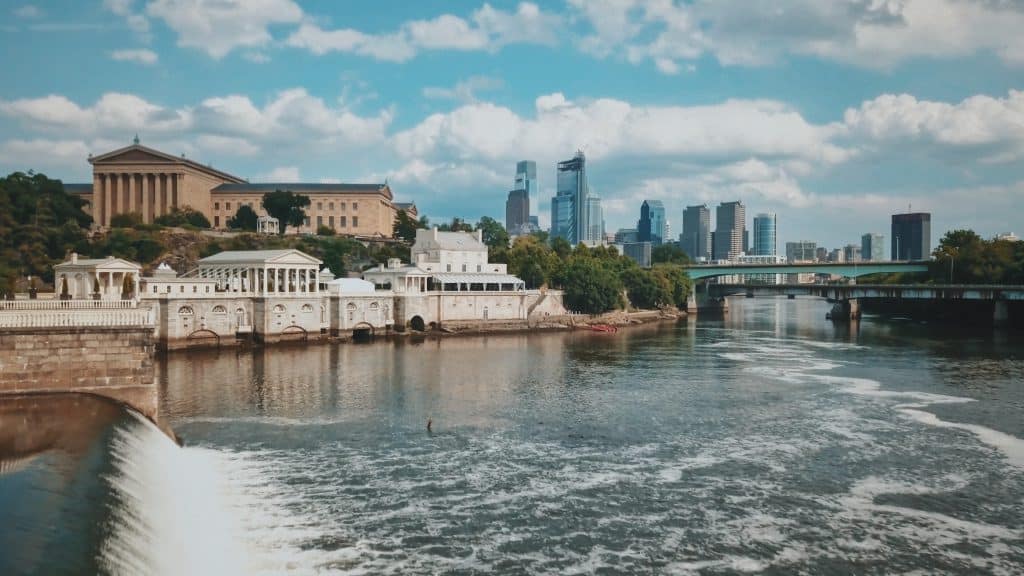
Iconic New York Backdrops: The Manhattan skyline, the bridges over the East River, and the waterfront give a brand a location that reads as premium the moment it lands on screen. Every neighborhood offers a different look for the story you are telling.
Rooftop to Waterline: Coverage runs from a tight rooftop reveal of a single property to a sweeping pass over the harbor. The right altitude is the one that makes your location look its best on camera.
Why: The Business Case
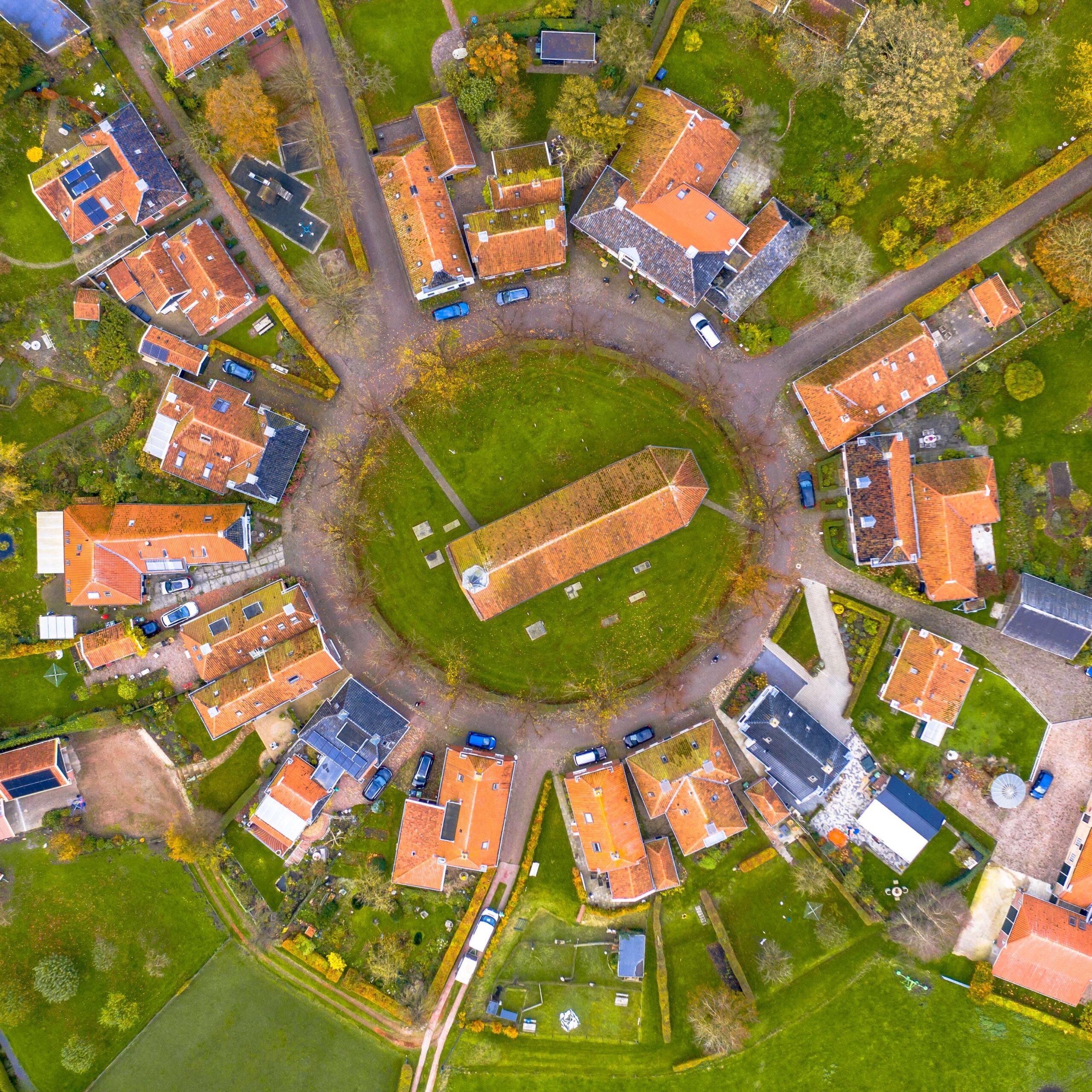
Information Density: A single aerial photograph conveys vital site information all at once. Ground-level documentation, by contrast, requires multiple shots and struggles to convey spatial relationships.
Attention and Recall: An aerial opening shot earns attention in the first seconds of a video and stays in memory longer than another street-level clip. That is the difference between a viewer who scrolls past and one who watches to the end.

Professional, Insured
Aerial Production
Why a Licensed, Insured Crew Protects Your Brand and Your Footage
The crew you put over a New York City rooftop represents your brand for the length of that shoot. A licensed, insured aerial team tells clients, partners, and building owners that the production is in professional hands. When the footage carries your name, the last thing you want is a question about who shot it or whether they were cleared to be there.
Getting a professional aerial shoot up over New York City takes clearances and building access that most in-house teams are not set up to arrange. A professional operator handles that groundwork, so the location is secured, the property owner or venue is on board, and the shoot day runs without a scramble. Your marketing team gets to focus on the story and the footage while the logistics stay off its plate.
Licensing and insurance also protect how the footage gets used. A properly credentialed crew delivers clips you can run in paid ads, on broadcast, and across social without a question about clearance or usage rights. Before a project starts, it is worth confirming that the production company holds current credentials and carries commercial coverage, and a professional team provides that on request.
Hiring on price alone can put the brand and the footage at risk when the work is not handled properly. A professional aerial partner takes that risk off the table so the campaign is the only thing anyone remembers.
Commercial Real Estate & Development
How Aerial Shots Communicate Site Logistics in Seconds
A 180,000-square-foot warehouse looks like a building from the street and looks like a logistics asset from 200 feet up. The aerial shot shows the loading dock count, the truck staging area, the proximity to the BQE on-ramp, and the rail siding running along the back of the property in a single frame. The ground-level photography captures the building. The aerial captures the operation. For commercial real estate buyers, the second one is the deal-relevant information.
Maps and diagrams can communicate the same logistics information, but slower. The aerial shot delivers in five seconds what a map attachment in an email takes minutes for a prospect to absorb.
Orbit Shots and Contextual Framing:
An orbit shot rotates the camera around the property at a fixed altitude, keeping the subject centered while the surrounding context, highways, neighboring distribution centers, rail access, regional infrastructure, sweeps through the frame. Motion graphics layered over the footage can label highway designations, property lines, and key infrastructure elements directly on the visual, which turns the shot from cinematic footage into a deal-relevant briefing.
Residential and Luxury Property Presentation:
New York City residential listings benefit from aerial shots that answer questions ground-level photography cannot. Proximity to main roads, lot dimensions from above, neighborhood density, whether the backyard runs to a creek or to a drainage easement. For luxury properties in upscale neighborhoods like the Upper East Side or Brooklyn Heights, aerial photography has become a baseline expectation at price points above the local market median. Properties without it look incomplete next to listings that have it.
Properties listed without aerial imagery get passed over for properties that include it. Logistics and context are the differentiator at the top of the market, and the listings that show both win the showings.
Aerial Progress Films for Stakeholders
Why Investors Follow a Build From the Air
A developer marketing a project wants investors and future tenants to feel the momentum. A monthly aerial series turns a working site into a story people want to follow, from groundbreaking to ribbon cutting.
The same footage becomes marketing the day the building opens, ready for the leasing page, the investor deck, and the announcement video.
Monthly Progress Time-Lapse:
Fly the same path at the same altitude on a steady monthly schedule and the frames stack into a time-lapse of the whole build. Month one is a cleared site. Month four is structural steel. Month eight is a finished facade. An investor in New York can scroll that sequence and feel the project moving without booking a site visit, and the completed time-lapse headlines the launch video when the building opens.
A Growing Library of Campaign Footage:
Every phase gives the marketing team new material. Site clearing, foundation, steel, and glass each read differently from the air, so the monthly flight builds a library of hero shots and social clips as the project rises. By the time the building opens, the campaign footage already exists.
The bigger the project, the more a strong launch matters. Monthly flights give a flagship New York development a full campaign ready to run on opening day, for a fraction of what the launch itself is worth.
FPV Drone Videography
Where FPV Captures Motion Standard Drones Cannot
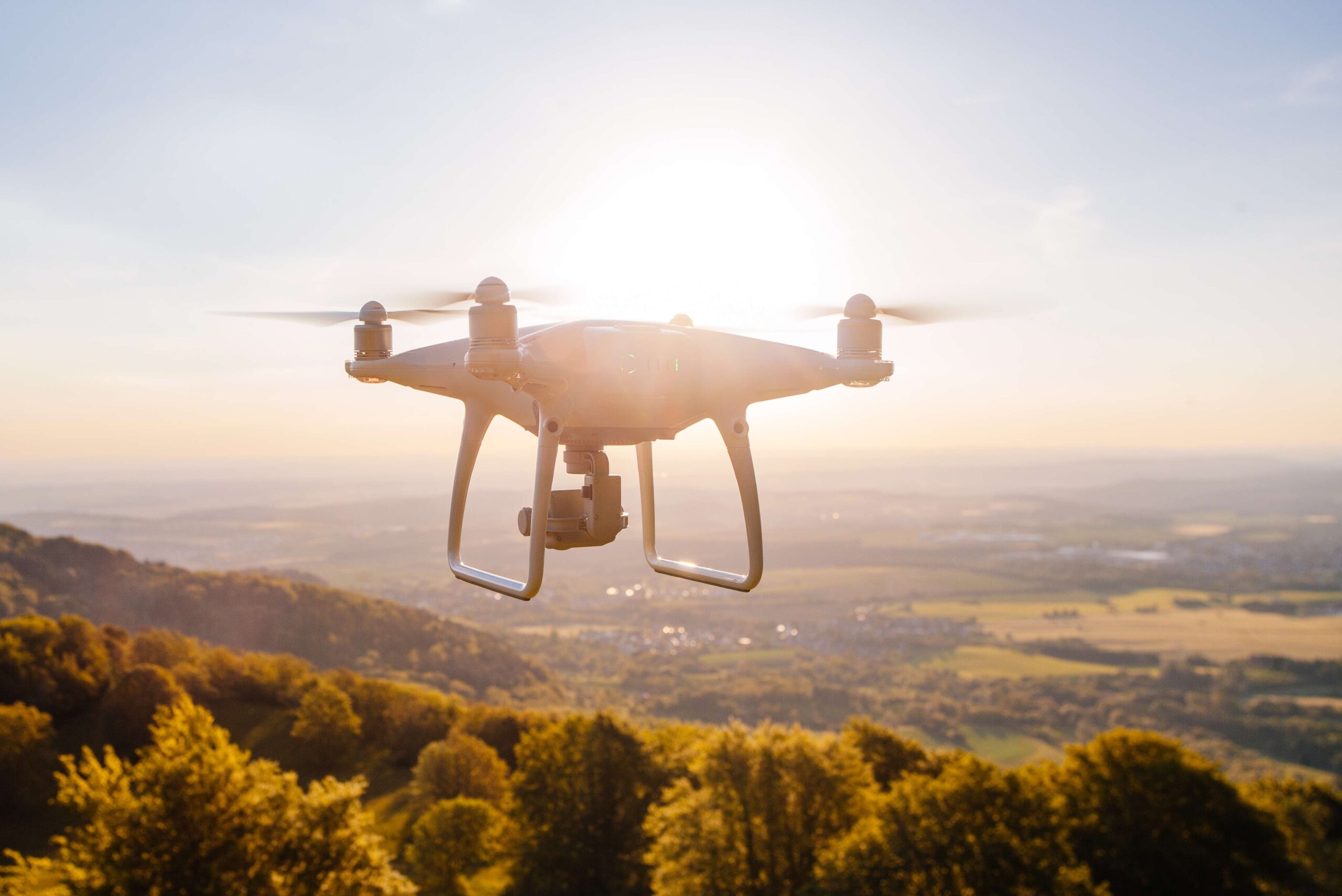
An FPV drone navigates through a doorway, sweeps through corridors, and exits a second-story window in one uninterrupted shot. FPV (first-person view) drones get piloted through goggles that show the live camera feed from the aircraft, which makes possible flight paths and shot dynamics that gimbal-stabilized drones cannot execute. The footage carries an energy and immediacy that standard aerial work cannot replicate.
FPV for Venue and Facility Tours:
Breweries, manufacturing floors, event venues, and large commercial spaces use FPV to produce immersive walkthrough content that moves through the space rather than around it. The continuous single-take is part of the effect. Cuts break the immersion, and the cuts that break it cannot be hidden in the edit. The shot either lands as one fluid sequence or it does not land at all.
FPV for Brand and Event Content:
Product launches, sports events, and athletic brand content use FPV to produce footage that conventional cameras cannot match: drone-mounted close-ups of athletes at speed, kinetic chase shots through obstacle courses, product reveals that orbit the subject in ways no camera operator could physically follow. The pilot skill required to execute these shots cleanly is the gate. A well-executed FPV sequence signals production investment and seriousness in a way most viewers register without naming.
FPV requires detailed pre-flight planning because the flight path is the edit. There is no fixing the shot in post if the pilot’s line is wrong. The route gets walked and rehearsed before the camera is in the air, and the shot happens in one take or it gets attempted again until it does.
Aerial B-Roll for Brand Films
How Aerial B-Roll Lifts Brand Films Above Stock Footage
A brand film built entirely from ground-level interviews and product shots reads flat regardless of how well the interviews land. Aerial B-roll is what gives the film visual scale, momentum, and the production value that signals investment to the viewer. A New York City business commissioning a brand video almost always benefits more from two hours of well-shot aerial coverage than from another half-day of ground-level reshoots, because the aerial layer is the part the in-house phone camera cannot replicate.
Establishing Shots and Scene Transitions
Aerial establishing shots open scenes and set location context in three to five seconds of screen time. The brand film cutting from a Manhattan rooftop shot to an interior interview communicates location, scale, and production polish in the first five seconds of the cut, before the subject has said a word. The same purpose served by ground-level establishing shots takes 15 to 20 seconds and lands with less impact. Aerial transitions between scenes also let the editor move geography without an awkward cut: from a Brooklyn warehouse exterior, sweep up and over the East River, descend into a Manhattan client meeting. The motion bridges the geographic jump that a hard cut would expose.
Subject Reveals and Hero Shots
A reveal shot starts wide above the subject and descends or pushes in to find them: the founder standing on the loading dock, the team gathered outside the office, the product staged on a rooftop. The shot accomplishes in one continuous move what a series of ground-level cuts would take 30 seconds to build, and the cinematic quality reads to the viewer as production investment. Hero shots over the business location work similarly for service area pages, About pages, and homepage video backgrounds where the goal is impression rather than information delivery.
B-Roll for Sales and Pitch Decks
Aerial B-roll captured during the main brand film shoot extends into sales presentations, investor decks, proposal videos, and trade show content for two to three years after the original production. A single shoot day producing 30 to 45 minutes of usable aerial coverage feeds the brand film, the homepage hero video, the social cuts, the pitch deck B-roll, and the proposal video reel. The cost-per-asset calculation works in favor of the aerial layer specifically because the footage redistributes across so many downstream uses.
Aerial B-roll is delivered as graded, ready-to-cut clips with matched color and frame rates. The same coverage feeds the brand film, the homepage hero video, the social cuts, and the pitch deck reel.
Tourism & Destination Marketing
How Aerial Footage Sells a New York Destination
An interior photo sells the room. An aerial shot sells the experience of being in New York. Hospitality and tourism compete on atmosphere, and atmosphere comes from context. The skyline behind the rooftop bar and the park across the street are what make a hotel feel like the center of the city.
Hotels, Restaurants, and Rooftop Venues:
A rooftop bar shot at golden hour with the skyline behind it books more reservations than any interior photo. For hotels, restaurants, and event venues across New York City, aerial footage frames the property inside the neighborhood people already want to visit and gives guests a reason to book before they arrive.
Destination and Event Marketing:
Tourism boards, festivals, and destination campaigns live on footage that makes a place feel like somewhere you have to be. Aerial coverage of a New York event or neighborhood gives a campaign the scale and energy that sells travel, tickets, and bookings, and it cuts easily into ads, sizzle reels, and social posts.
Hospitality and destination marketing is sold on aspiration, and aerial footage delivers it directly. The New York venue that markets with strong aerials gets booked by guests who pictured themselves there before they ever walked in.

Event Coverage & Live Streaming
Why Aerial Coverage Communicates Event Scale to Sponsors and Media
Scale is the specific thing aerial coverage communicates that ground-level cameras cannot. A festival packed shoulder-to-shoulder reads as crowded from the photographer’s POV at the front of the stage. The same festival shot from 300 feet up reads as a 40,000-person event with the impact visible in one frame. The aerial shot is what gets used in the sponsor recap, the press release, the next year’s pitch deck. The ground-level shots tell the story of individual attendees. The aerial shot tells the story of the event.
FAA rules restrict flight directly over crowds without specific waivers, which means most event aerial coverage gets shot at angles rather than overhead. The flight path gets planned in pre-production to capture scale from oblique angles where the regulations allow it.
- Event Documentation and Highlight Content: Festivals, races, concerts, and outdoor activations in New York City use aerial coverage to convey scale and energy that the on-the-ground footage cannot reach. The shot that captures the size of the activation area against the size of the crowd is the shot that gets used in the sponsor report, the recap reel, and next year’s media pitch. The individual close-ups serve different content. The aerial shot answers the question every sponsor asks: how big was it.
- Live Downlink and On-Site Display: Live drone feeds streamed to a large screen on-site let attendees see themselves from above in real time, which becomes a moment of the event itself rather than just documentation of it. The technical setup requires dedicated transmission equipment separate from the standard flight control system and a receiver tied into the venue’s display chain. Pre-production confirms the equipment compatibility before the event day rather than discovering issues on-site.

Post-Production & Color Grading
What Color Grading Recovers From Flat Source Footage
The footage a drone hands over straight out of the camera looks flat. That is by design. Cinema drones shoot in flat color profiles like D-Log or D-Cinelike to capture the full dynamic range of the sensor. Bright skies do not clip to white. Deep shadows hold detail. The trade is that the raw footage looks washed out. The color, contrast, and depth get added back in post-production through grading. The footage that lands on the homepage is the graded version, not what came off the SD card.
 Color Grading for Cinematic Output
Color grading restores saturation selectively. The green of summer parks in Brooklyn, the warm tones of late afternoon light on Manhattan limestone, the blue of the East River from an eastern approach. Contrast adjustments add visual depth. Stabilization software corrects micro-jitter that a three-axis gimbal cannot fully eliminate in moderate wind. The result is broadcast-ready footage that meets the spec for commercial use across web, social, and broadcast.
 Workflow and Deliverable Formats:
Deliverables include ProRes files for professional editing pipelines, H.264 or H.265 for web and social delivery, and specific broadcast specs for TV use. Raw camera files get retained for long-term archival or future regrades on the same footage. Still photography exports as high-resolution TIFFs or JPEGs at 48 megapixels, which is the resolution print and out-of-home applications require.

Protecting Your Shoot Date and Deadline
How We Protect Your Delivery Date
Every shoot is booked to hit a delivery date, and the weather is the one thing we cannot put on the calendar. When conditions on the day would hand you footage you cannot use, we protect the deliverable and move the flight rather than deliver something that misses the mark. That call gets made early, so your timeline never comes as a surprise.
- Booked With a Buffer: High-value shoots are scheduled with backup windows built in, so a rained-out morning does not cost you the campaign. We track the forecast in the days ahead and confirm the go or no-go while there is still time to adjust the plan.
- Ready on the Green-Light Day: When the window opens, the crew and the shot list are set to move fast and capture everything in one visit. A New York City shoot day is planned around the light and the locations so the footage lands the first time.
Moving a flight for weather protects the one thing the campaign actually needs, which is footage good enough to run. A marginal shoot delivers clips that never make the final cut, and rescheduling a day beats missing the deadline with material you cannot use.

Frequently asked questions
Can drones fly indoors?
Yes, and it opens up interiors for marketing. A drone can move through a hotel lobby, a retail floor, or a restored loft in one continuous shot that a handheld camera cannot match. Indoor flights run slower and take extra planning, and the result is a walkthrough that makes a New York City space feel alive on screen.
How soon will we get the finished video?
Turnaround depends on scope, and most brand and property projects get a first cut within one to two weeks of the shoot. Rush timelines for a launch or a listing can be arranged ahead of time. You receive graded, ready-to-run footage in the formats your campaign needs.
Can drones fly at night?
Yes, and New York City after dark is one of the strongest backdrops a brand can use. Illuminated skylines, storefronts, and event spaces read as premium on camera. Night shoots take extra planning and lighting, and the payoff is footage that shows a location at its most cinematic.
Is your aerial production insured?
A professional aerial team carries commercial liability coverage, which protects your brand as much as the crew. When footage runs under your name, working with an insured, credentialed production keeps usage and liability risk off your plate. A reputable company provides proof of coverage on request before the shoot.
Can you match the footage to our brand’s look?
Yes. Aerial footage is graded to match your existing brand videos, color palette, and editing style so it cuts seamlessly into a campaign. We confirm the look and the reference material before the shoot, and the delivered clips drop straight into your edit.
Will the footage work across all our channels?
Yes. One shoot is planned to feed every channel at once, with wide masters for your website and broadcast, vertical cuts for Reels and TikTok, and stills for print. You get a full set of deliverables sized for where your audience is, not a single file you have to re-crop.
What resolution is drone footage and photography?
Drone footage is typically captured at 4K (3840 x 2160) for cinematic and broadcast applications, or 1080p Full HD for web and social delivery. Higher-end cinema drones shoot 6K for additional cropping flexibility in post. Still photography from drone-mounted sensors runs 20 to 48 megapixels depending on the aircraft, with the higher resolutions suitable for billboard and large-format print.
Does drone footage include audio?
The dominant noise during drone operation is the whirring of propellers, rendering ambient audio unusable. Drone footage is delivered without background noise, necessitating post-production addition of music, sound effects, or voiceover for effective storytelling. In cases where crowd audio is crucial, a separate ground-based recording system captures the room sound, which is then synchronized with aerial footage during editing.
Do you handle the permits and location access?
Yes, and that is part of the service. A professional aerial team secures the clearances and the property or venue access a New York City shoot needs, so your marketing team never has to chase paperwork. The location is locked in and the shoot day runs on schedule.
Can drone video be streamed live to a remote viewer?
Yes. A live aerial feed can broadcast a product launch, a grand opening, or a branded event to an audience watching from anywhere. Remote stakeholders and online viewers see the moment as it happens, which turns a single event into content that reaches well beyond the room.

Google partner
Premiere Agency