 610.432.2600
The Buyer Who Needs You Next Month Is Not Searching Today.
Paid Social Reaches Them Now.
Typically, individuals seeking an emergency plumber have already made up their minds about needing one, as search queries often reflect this intention. Paid social advertising operates under a different logic. Most people scrolling Meta, TikTok, or LinkedIn are not searching for anything at all, so the ad reaches a Philadelphia buyer weeks before they think to look, and it builds the demand a competitor only gets to capture once that search finally happens.
Project Snapshot: The 5 Ws
How a Philadelphia Paid Social Program Is Built
The Who
The What
The When
The Where
The Why

Who: The Audience Being Targeted
The Passive Scroller: A person not actively searching for anything. Behavioral data, interests, location, and demographics mark them as a business’s likely next customer. The targeting finds them.
The Warm Retarget: Someone who already knows the business, having visited a page, watched a video, or engaged with an earlier ad. They expressed interest. The follow-up message addresses that specific interest.

What: The Campaign Work
Prospecting Campaigns: These campaigns put a business in front of cold audiences a competitor has not reached yet, through interest targeting, lookalike audiences, or demographic filters. Goal is awareness, not immediate conversion.
Retargeting Campaigns: Bottom-of-funnel work that returns to warm audiences a business has already earned, pairing them with specific offers that turn familiarity into a decision.

When: The Timing
Algorithmic Delivery: The platform’s own algorithms release ads in the windows when a chosen audience is most active, which is why advertisers who trust automated delivery tend to out-earn those forcing manual dayparting for most objectives.
Funnel Sequencing: Awareness messaging runs first. Retargeting follows after a defined engagement threshold. The same offer earns less from a cold audience than from one an earlier awareness touchpoint has already warmed to the business.
Where: The Placements
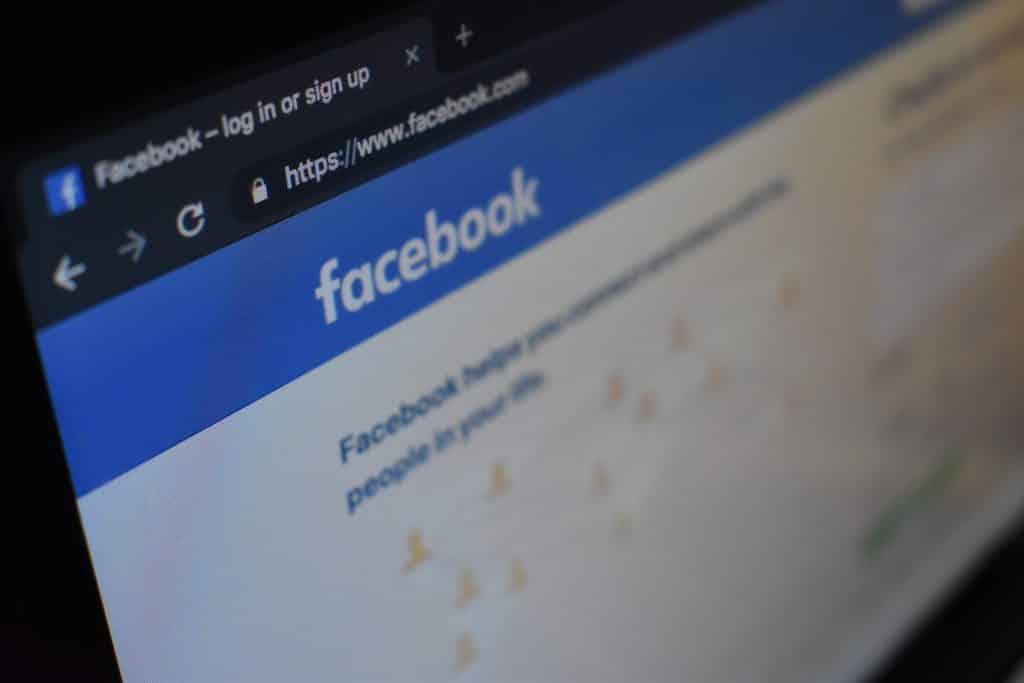
Meta Properties: Placements run across the Facebook feed, Instagram feed, Stories, Reels, Marketplace, and Audience Network, and a business earns better returns by matching creative to each, since every placement carries its own dimensions, audience behavior, and cost structure.
LinkedIn, TikTok, Pinterest: LinkedIn earns B2B trust by letting a business reach buyers by job title and industry. TikTok connects with younger demographics through short-form video. Pinterest reaches high-intent audiences shopping home and lifestyle categories.

Why: The Business Case
Demand Generation: Search only reaches the people already looking, while paid social introduces a business to buyers who do not know it yet, and for companies whose reputation has to be built before that search ever happens, social is where the pipeline starts.
Audience Development: Every dollar of paid social also compounds into retargeting pools, email lists, and the brand recognition that keeps a business the familiar local name across every other channel over time. The spend earns immediate conversions and the trusted audience that future campaigns close.

Facebook and Instagram Advertising
for Local Businesses
Why Meta Beats Local TV and Radio for Reaching the Right Neighborhood
The platforms’ user demographics diverge significantly. Facebook’s affinity for homeowners and adults with purchasing power creates a distinct audience profile. Meanwhile, Instagram is skewed towards a younger, visually-oriented demographic. Interestingly, both networks operate on the same advertising platform.
Dark posts enable targeted ad delivery without publicly visible promotional activity on the page timeline. This strategy allows for simultaneous messaging to different segments without overwhelming the user with an array of promotions.
LinkedIn Advertising for B2B Lead Generation
When a $50,000 Deal Justifies LinkedIn’s Premium Click
Most comparisons of advertising costs are skewed by misaligned expectations. In contrast, the efficiency of targeted ads becomes apparent when compared to a cold-calling salesperson with zero brand familiarity.
Job Title Targeting and ABM:
For Philadelphia manufacturers targeting purchasing managers, precision is key. Ad targeting can be narrowed to specific job titles within defined companies, industries, and geographic areas. The ad appears directly in the feed of decision-makers the sales team wants to reach, establishing brand awareness that warms up subsequent outreach efforts.
Content and Lead Generation Formats:
Lead generation campaigns succeed when content resonates with a professional audience seeking credible information. Document ads allow relevant whitepapers or case studies to be previewed and downloaded via lead forms, addressing credibility concerns before making contact. Sponsored content outperforms when it delivers genuinely useful insights that earn engagement.
For one specific kind of B2B sale, LinkedIn is the right call. It is wrong for almost everything consumer-facing.
Audience Targeting and Lookalike Audiences on Meta
Why Your Existing Customer List Beats Any Interest Filter
It is the CRM, the customer email database, the transaction history. Uploading it turns that owned data into a targeting asset competitors cannot copy.
Custom Audiences by Intent Level:
Meta’s Custom Audiences are segmented by intent levels, reflecting varying degrees of engagement and consideration. Customer email lists represent the warmest tier, whereas visitors to specific pages (like pricing information) signify even greater interest. Messaging is calibrated accordingly, avoiding generic awareness messages that fail to resonate with each audience segment.
Lookalike Audiences:
Creating a lookalike audience involves uploading a source audience and instructing the platform to identify users sharing key statistical attributes. A 1% lookalike is smaller yet more precise than its larger counterpart, the 5% variant. Notably, a high-quality source audience yields superior results; for instance, using 200 top customers outperforms a list of 5,000 unqualified leads.
Interest targeting serves as an entry point, but it’s essential to note that lookalike audiences built from actual customer data offer greater refinement. For businesses with sufficient history to establish a meaningful source audience, this approach yields more precise targeting and improved campaign performance.
Ad Creative Strategy and Social Ad Formats
Native-Style Creative Earns the Stop That Polished Ads Lose
Every ad competes against posts from friends, family, and followed accounts. The visual context is the competitive environment.
Pattern Interrupts and the Hook:
The initial seconds of a video or static ad can make all the difference in capturing attention. What truly arrests a viewer’s gaze is not just movement, but unexpected juxtapositions and direct queries that speak to their specific concerns. A well-crafted hook isn’t just about headlines; it encompasses the entire first impression.
UGC-Style Creative:
Phone-shot videos resonate with organic content, sidestepping traditional advertising patterns. A customer-generated 30-second video detailing a genuine problem and resolution outperforms polished brand productions because its peer-to-peer authenticity reads as real. In this context, lower production value is not an impairment; it’s a deliberate choice.
Consistent exposure to the same audience can lead to creative stagnation after just two weeks. When frequency surpasses three to four repetitions, it’s clear that fresh content is needed to prevent ad fatigue.
Retargeting Campaigns and Meta Pixel Setup
How Retargeting Brings Back the Visitor Who Left Without Converting
With one, it is the start of a follow-up sequence.
Meta Pixel and Audience Building:
The Meta Pixel records what visitors actually do: page views, form submissions, purchases, phone number clicks. Those signals build audiences a business already owns. The person who read the pricing page but never sent a form. The person who filled a cart but never checked out. Each of those audiences hears a message tied to the exact step it left unfinished, so the follow-up speaks to that hesitation instead of starting the pitch over.
Frequency Management:
Retargeting with no frequency cap turns intrusive and costs a business the goodwill it just earned. Show the same ad fifteen times in a week and negative brand association arrives faster than any conversion. A sequence that changes the message across days one, three, and seven, answering a different objection each time, builds more trust than hammering the same creative. It moves the conversation forward instead of replaying it.
Retargeting returns the highest ROAS of any campaign type because the audience already trusts the brand. The spend is a follow-up to a relationship, not a cold introduction.
TikTok Advertising and Short-Form Video Strategy
Why Philadelphia’s TikTok Audience Skews Older and Costs Less
Industry misconceptions have driven ad inventory prices lower. Local businesses are slow to adopt, leaving untapped opportunities for those who do invest in the platform.
Ad Formats and Spark Ads:
When ads appear within organic feeds on TikTok, they can be skipped by users scrolling through content. Spark Ads enhance existing posts while maintaining social proof metrics such as likes and comments intact. This credibility boost is a key advantage over standalone ad units.
Content Requirements:
Native-style ads perform better on the platform than traditional television-like commercials do. Direct address to camera, trending audio, and quick cuts all contribute to effective native advertising. Local businesses in Philadelphia can reach their target audience at a lower cost per impression compared to Facebook using this approach.
TikTok’s search function is expanding as a discovery channel for specific categories such as home services, food, and local goods. Both organic and paid opportunities exist on the same platform simultaneously.

A/B Testing and Paid Social Campaign Optimization
How a Split Test Names the Creative That Actually Converts
The difference between a winning ad and a losing one is often a single variable. With $1,000 in spend, one creative can produce 312 clicks at $3.20 each while another pulls 1,428 clicks at $0.70. Same audience, same budget, same objective. The only difference is the creative asset and headline.
A test result earns its keep only when it shapes the next test. Optimization is a cycle.
- Isolating Variables: Analyzing singular variables in isolation yields concrete insights but raises questions about cumulative effects. To isolate variables, consider tests that pit image against video, urgency headlines against question headlines, or warm palettes against cool. Each variable is scrutinized separately, yielding definitive conclusions about its impact. A campaign altering multiple elements at once obscures the specific influence of each change.
- Scaling Winners: Philadelphia advertisers often allocate more budget to top-performing ad sets and pause underperforming ones. Most platforms support automated rules that optimize budget allocation based on click performance. Yet, manual oversight is still required: algorithms may inadvertently direct cheap clicks toward incorrect audiences if conversion events are not clearly defined.

iOS Privacy Changes and
the Meta Conversions API
How iOS 14 Broke Conversion Tracking and What Replaced It
The discrepancy between reported and actual results ballooned. Budget allocations based on incomplete data led to poor decision-making.
 Conversions API
Facebook’s Conversion API (CAPI) transmits conversion data directly from a business’s server to Meta’s servers, circumventing browser limitations imposed by iOS restrictions. When users submit forms or make purchases, the server triggers conversion events regardless of device settings. With CAPI and the pixel in tandem, businesses can capture the most comprehensive conversion dataset under current constraints.
 First-Party Data as a Durable Asset
Firms with built-in insulation from evolving platform policies have cultivated first-party data assets: email lists, CRM databases, SMS subscribers. These resources are independent of third-party tracking and continue generating revenue through targeted campaigns. An email list created through paid social promotions remains effective despite ad platforms’ restricted capabilities. The campaign establishes the asset; it operates independently.

Paid Social Budgeting, ROAS, and Scaling Strategy
The Point Where Paid Social Stops Being a Cost and Starts Being Revenue
The question at that point is not whether to spend. It is whether enough of the local audience is left to scale into.
- ROAS and Gradual Budget Scaling: Budget allocation for scaled campaigns must consider Meta’s algorithmic learning phases. Significant changes in ad spend trigger re-entries into these phases, resulting in a higher cost per result until recalibration occurs. Incremental budget increases of 15 to 20% every three to four days allow for adjustments without full resets.
- Audience Exhaustion: Audience saturation is inevitable when frequency exceeds optimal levels on a defined demographic. The symptoms include rising cost per result and dwindling returns, often mistaken for platform decline rather than audience exhaustion. To overcome this plateau, marketers must re-evaluate their targeting strategies or introduce fresh creative assets to stimulate engagement.
The ceiling on a paid social campaign is audience size and creative refresh rate, and across a metro the size of Philadelphia both stay wide open for a long time. Once the tracking is clean and the return on ad spend holds steady, the budget stops reading as a marketing cost on the books and starts reading as a revenue line the business can plan its next quarter around.


Frequently asked questions
How much should a business budget for paid social advertising?
Funding an ad budget of at least $1,000 per month allows algorithms to exit the learning phase and begin optimizing delivery efficiently. Below this threshold, conversion data accumulates too slowly for meaningful adjustments. The optimal budget is determined by a complex interplay of cost per conversion in the specific category, margin on the product or service, and the volume of leads the business can handle.
What is the difference between boosting a post and using Ads Manager?
Content amplification through boosting offers limited targeting options and a narrow set of objectives, primarily focused on reach and engagement. Ads Manager provides an expanded suite of campaign objective sets, complete audience targeting controls, placement options, budget optimization, and all creative formats at scale. Boosted posts are best suited for increasing visibility on existing content rather than driving lead generation or conversion campaigns.
What is a social media advertising funnel?
Message resonance is influenced by audience temperature in three distinct stages. Top-of-funnel audiences are served awareness content introducing the business to cold prospects. Middle-tier audiences, who have engaged previously, receive consideration content addressing why this business stands out. Bottom-tier audiences, warm and demonstrating purchase intent, are served direct offers with clear calls-to-action. Running the same message across all three stages is a waste of spend on mismatched intent.
Why do Facebook ads get rejected?
Common ad rejection triggers include before-and-after imagery in health contexts, claims implying knowledge of users’ personal circumstances, discriminatory targeting in housing or employment, and landing pages that don’t match ad content. Submitting the same ad after it’s been rejected is a futile exercise; understanding which policy was violated speeds up the resubmission process.
Is LinkedIn advertising worth the higher cost per click?
High average contract values make LinkedIn an attractive channel for B2B businesses with substantial deals. A $15 click leading to a $40,000 contract is indeed cost-effective. For consumer-facing businesses or categories with lower average transaction values, the math becomes increasingly difficult to support, often making LinkedIn’s use misguided.
Does video outperform static images on social platforms?
Video content excels in most categories and placements by holding attention longer, producing stronger brand recall, and generating higher engagement rates compared to static images. Short-form videos under 30 seconds with a strong hook outperform both longer video and static images in feed placements. Phone-shot video can perform comparably to produced video in many categories due to its perceived authenticity.
What is a lookalike audience?
Audience matching is a nuanced process where the platform analyzes source audiences, typically customer lists, to find users sharing similar characteristics. A 1% lookalike audience is the most precise match; larger audiences of 5% or more are less so, with quality being determined by the source audience.
How is conversion tracking set up for social ads?
The Meta Pixel installed on websites captures specific user actions: page views, form submissions, purchases, and phone clicks. These events then appear in Ads Manager as conversion actions campaigns can optimize towards. Without conversion tracking, campaigns default to optimizing for clicks and reach rather than business-driven outcomes, often at the expense of effectiveness.
Can ads target a competitor’s audience?
Targeting by competitor name is largely unavailable on most platforms; Meta has removed this feature for most categories. What a business can still do is target the interest topics tied to its category. A hardware store cannot directly target Home Depot followers but can target users interested in home improvement and DIY projects. LinkedIn does allow company name targeting for account-based marketing, enabling B2B businesses to target employees of specific named companies.
How often does ad creative need to be refreshed?
Ad fatigue typically sets in after 2-3 weeks of consistent exposure to the same audience, indicated by rising cost per result and declining click-through rates on previously performing creative. Frequency above 3-4 impressions per user is a leading indicator. Refreshing doesn’t require rebuilding the campaign entirely; new images, a video hook, or headline copy can be enough to reset engagement.

Google partner
Premiere Agency