
 610.432.2600
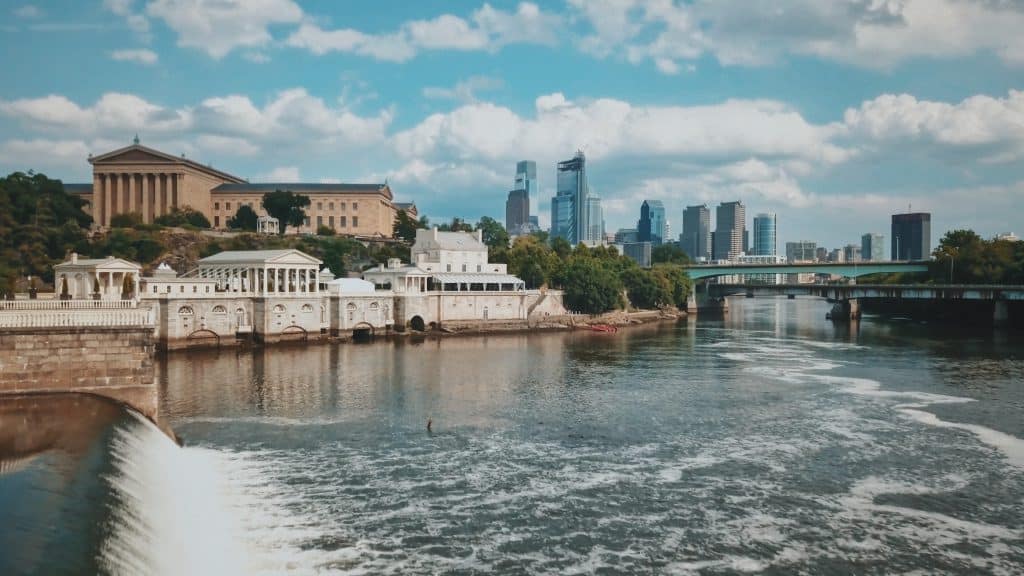
From Boathouse Row to the Center City Skyline, Aerial Footage Sells Philadelphia Brands.
The most memorable brand content in Philadelphia rarely starts at eye level. An aerial shot pulls back to show the whole story, the block, the skyline, the crowd, and the setting a brand lives in, and it reads as premium the moment a video begins. That is the difference between footage an audience scrolls past and footage that makes them stop.
Project Snapshot: The 5 Ws
What Defines Your Drone & Aerial Videography
The Who
The What
The When
The Where
The Why

Who: The People Commissioning Aerial Work
\
The Commercial Real Estate Developer: Needs listing content that sells a property on its location and lifestyle rather than its square footage alone. One aerial orbit over a Navy Yard building or a Fishtown block markets the address the way a folder of ground-level photos never could.
\
The Construction Project Manager: Needs progress content that keeps owners, investors, and lenders engaged between site visits. A monthly aerial edit turns a Center City high-rise or a rowhouse renovation into a story stakeholders actually want to watch.

What: The Aerial Work
\
Cinematic Video and Photography: Broadcast-grade 4K and 6K capture, 48-megapixel stills, and deliberate flight choreography built for marketing reels, brand storytelling, and listing presentations that need to look expensive.
\
Content Built for Every Channel: Vertical cuts for Instagram and TikTok, wide establishing shots for a website homepage, and polished sequences for a brand film or a paid campaign, all pulled from a single shoot day.
When: The Timing Constraints
\
Golden Hour for Cinematic Work: Directional light at sunrise and sunset gives aerial footage the depth and warmth that make a brand look polished, and the Center City skyline at dusk sells a mood that flat midday footage cannot.
\
Booked Around the Forecast: The shoot window is set around clear, workable conditions so the footage looks its best on delivery, instead of booking a date and hoping the sky cooperates.
Where: The Operating Environment
\
The Locations That Sell Philadelphia: From the row-home grid of South Philly to the bend in the Schuylkill, Boathouse Row, and the Ben Franklin Parkway, the city hands a brand a backdrop that instantly reads as Philadelphia.
\
Where the Footage Ends Up: The same flight feeds a website homepage, a social feed, a listing page, and a paid campaign, so one aerial shoot works across every channel a brand runs.
Why: The Business Case
\
Information Density: One aerial photograph carries location, scale, and setting in a single frame, and that context is exactly what makes an audience understand a brand or a property in seconds.
\
Attention and Recall: Aerial openers stop the scroll and stay in memory longer than ground-level footage, which is why the brands that use them earn more views, longer watch time, and more inquiries from the same budget.

Professional, Insured Aerial Production
Why Brands Hire an Insured Aerial Team Instead of a Hobbyist
The footage that carries a brand should be produced by a team that treats it like a professional job. A licensed, insured aerial crew shows up with a plan, a shot list, and the coverage a client expects, and that level of professionalism shows up on screen.
Insurance is the part clients feel the moment something matters. A hobbyist flying as a favor leaves the property owner, the venue, and the brand exposed if anything goes wrong. A professional production carries its own liability coverage and shows proof of it before the shoot, so the client never carries that risk.
Preparation is what separates usable footage from a wasted afternoon. A professional team scouts the location, plans the flight around the light and the look the brand is after, and arrives ready to capture the shots the campaign actually needs rather than improvising on the day.
The difference shows up in the final cut. Polished, stabilized, well-lit aerial footage tells an audience that a brand invested in its image, and viewers read that production quality as a sign the business itself is serious.
Commercial Real Estate & Development
How Aerial Perspectives Sell Properties That Ground Photos Cannot
The warehouse is 180,000 square feet, and a ground photo will prove it. What the ground photo will not prove is that the building sits four minutes from the I-95 interchange. The aerial pass carries both numbers in one frame, and location logistics are what a commercial buyer is actually shopping for.
Orbit Shots and Contextual Framing:
An orbiting shot circles the Warehouse at a consistent altitude and radius, keeping its center in view as the surroundings rotate behind it. As the scene unfolds, key features like the highway interchange, neighboring distribution centers, rail access points, and regional infrastructure come into frame. Overlaid motion graphics can label these elements directly onto the footage. This 10-second orbit conveys more about site logistics than a 50-slide property presentation.
Residential and Luxury Property Presentation:
In luxury residential listings around Philadelphia, aerial photography answers fundamental questions that listing photos often cannot: proximity to main roads, lot size from above, neighborhood density, and property boundaries. Drone captures have become an expected standard for high-end properties in affluent areas like Upper Merion Township, Lower Merion, and exclusive estates within the city limits.
Without aerial imagery, a property is forced to compete solely on specifications against those marketed with rich contextual content. The disparity in appeal is stark. Properties without context are at a significant disadvantage in the market.
Construction Progress Monitoring
Progress Footage That Keeps Investors and Owners Watching
A monthly aerial edit turns a construction site into content that owners, investors, and future tenants actually want to follow.
Monthly Progress Documentation:
Flying the same route at a fixed altitude each month builds a time-lapse of the whole project. Month one shows cleared ground, month four shows the steel frame, and the finished sequence gives stakeholders a story they can share without ever visiting the site.
Leasing and Announcement Content:
The same flights double as marketing material. A developer can cut the footage into a leasing reel, a groundbreaking announcement, or a topping-out post that markets the project to future tenants and the local press while it is still under construction.
The bigger the project, the more a monthly aerial series is worth. It keeps the build in front of the people funding it and gives the marketing team a steady stream of content long before the ribbon is cut.
FPV Drone Videography
An FPV drone threads a doorway, banks a corner, and exits a second-story window.
An FPV drone flies one continuous, high-energy path through a space, and that unbroken motion is what makes the footage feel alive in a way a standard aerial shot cannot.
FPV for Venue and Facility Tours:
One flowing shot moves through a Fishtown taproom, a manufacturing floor, or a retail space without a single cut, pulling the viewer through the experience the way a walk-through never could. That continuous motion is what keeps people watching to the end.
FPV for Brand and Event Content:
Brands reach for FPV when they want product launches, sporting events, and social campaigns to feel fast and distinctive. The look is hard to copy, which is exactly why it stands out in a feed full of ordinary footage.
Because the flight path is essentially the edit, an FPV shoot is planned shot by shot in advance, so the finished piece lands exactly the way the brand pictured it.
Aerial B-Roll for Brand Films and Commercials
Why Aerial B-Roll Lifts a Brand Film Beyond Ground Footage
A brand film built entirely from ground-level footage keeps the viewer in human eye-line the whole way through. Cut to an aerial shot, even for a few seconds, and the whole piece changes register and signals production scale. That shift is what separates a video that feels local from one that feels like a national campaign, whatever the budget actually was.
Establishing Shots and Scene Transitions:
The opening aerial shot answers where the story is happening before a word is spoken. A pull-back from a Center City building reveals the block around it. A reveal over the Schuylkill drops the viewer into Philadelphia with momentum. Aerials dropped between interview segments reset the setting and give the audio room to breathe before the next beat.
Cinematic Movement and Production Value Signal:
Smooth aerial movement, a slow orbit, a controlled rise, a steady forward push, reads as production value the way a tracking shot does in a feature film. Handheld interviews carry authenticity, and aerial sequences carry investment. A brand film that mixes both looks intentional rather than under-produced, and for a Philadelphia business going up against larger regional names, that is the clearest way to look like it plays at the same level.
Aerials in a brand film are not decoration. They are the visual proof that the production took the brand seriously enough to send a crew into the air, and audiences register that even when they cannot say why the film feels bigger than a competitor’s.
Tourism, Hospitality, and Destination Marketing Aerials
Why Aerial Footage Sells a Destination Better Than Interior Photos
A photo of a restaurant interior sells the room. An aerial shot of that same restaurant on a Saturday night, patio full and the Center City lights spreading out behind it, sells the experience of being there. Hospitality marketing runs on atmosphere, and atmosphere lives in the context that only aerial footage can show.
Restaurants, Rooftops, and Outdoor Venues:
For a Fishtown brewery with a beer garden, a rooftop bar over Center City, or a restaurant with sidewalk seating, aerial footage captures the energy of a full house from above. The patio at peak hour, the string lights against the evening sky, the line of guests waiting for a table, none of that reads in a static interior shot. Cut into short social formats, that footage gives a venue something fresh to post every week through the busy season.
Wedding and Event Venues:
A wedding or event venue is booked on the experience a couple can picture for their guests. Aerial footage of the grounds at golden hour, the ceremony lawn, the reception space, the skyline or the river beyond, lets a prospect see the property at its most cinematic before they ever book a tour. For a Philadelphia venue competing with destinations in Bucks County or the Poconos, that footage is what makes a local property read as a destination.
Destination marketing is sold on aspiration, and aerial footage delivers aspiration directly. The venue that markets with strong aerials gets booked by guests who already pictured themselves there long before they set foot on the property.

Event Coverage & Live Streaming
From the Ground a Crowd Is a Wall. From the Air It Has a Shape.
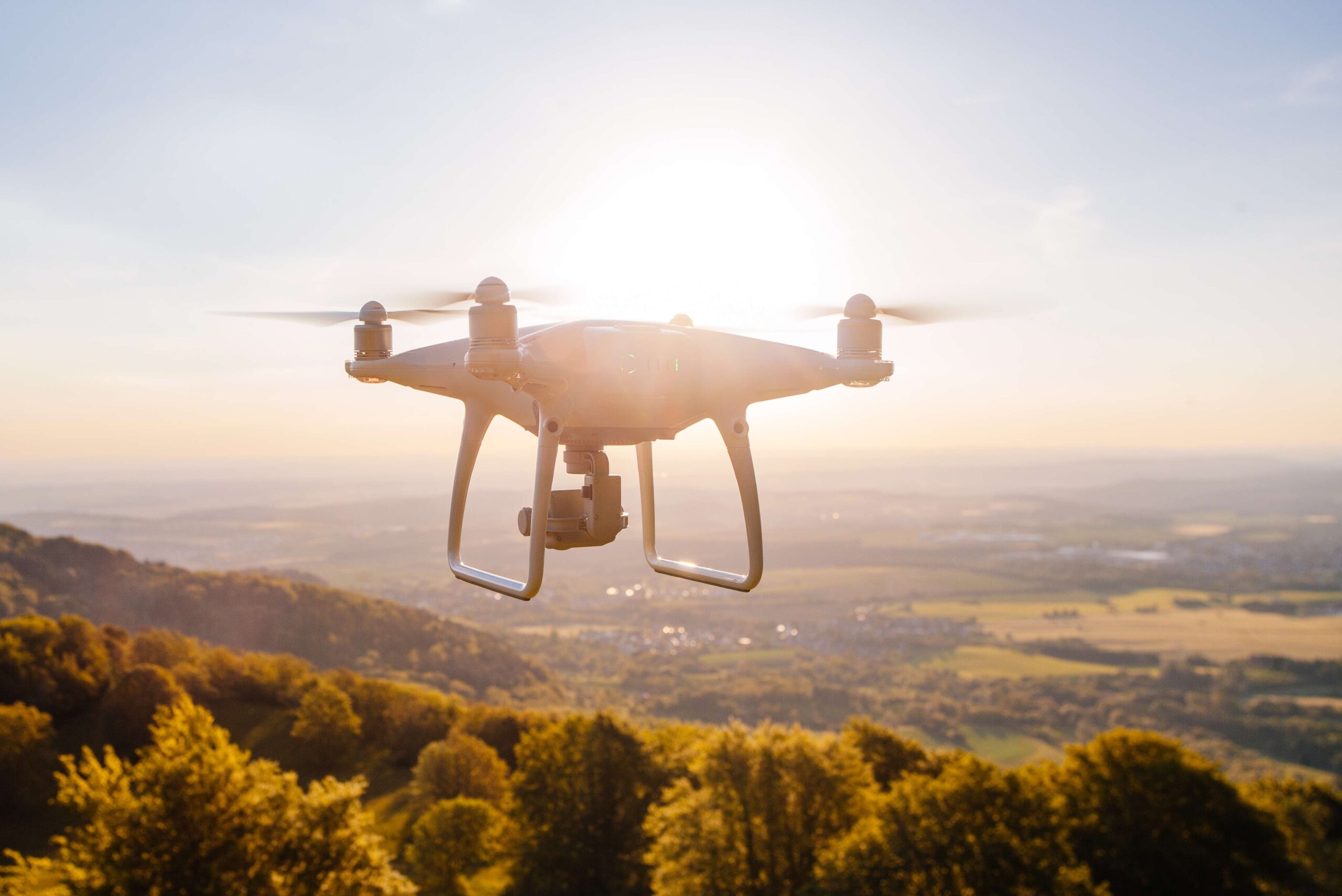
A crowd of 3,000 photographed from the ground is a wall of shoulders and a rough guess. The same 3,000 from 200 feet up is a measurable footprint, with the stage, the vendor rows, and the overflow all in one frame. That read on scale is exactly what aerial event coverage delivers and a ground-level camera cannot.
Aerial coverage is shot from offset positions around the crowd rather than directly overhead, which keeps everyone safe and still captures the full scale of the event in frame.
- Event Documentation and Highlight Content: Philadelphia festivals and corporate events rely on aerial coverage to convey event attendance and energy. Captivating visuals that highlight sponsor activations, site scale, and crowd density are essential for sponsors, attendees, and media alike.
- Live Downlink and On-Site Display: A live aerial feed on the stage screens lets the crowd see themselves from above in real time, a shared moment that sponsors love and that attendees pull out their phones to film. It is the kind of branded experience that keeps an event circulating online long after it ends.

Post-Production &
Color Grading
Drone Footage Straight Out of the Camera Looks Flat. That Is by Design.
Capturing footage in D-Log or D-Cinelike mode retains the sensor’s full dynamic range. This allows the sky to remain intact, without blowing out, and preserves the shadows from getting crushed. The color data is preserved for post-production grading.
 Color Grading for Cinematic Output:
Color grading brings depth to flat profiles by restoring and shaping the footage. Saturation is selectively increased: think of the vibrant greens of Philadelphia’s lush parks in springtime or the warm tones of the city’s historic district at dusk. Contrast is added to give the image dimensionality. Stabilization software tames micro-jitter caused by moderate wind, even with a three-axis gimbal.
 Workflow and Deliverable Formats:
Deliverables include ProRes for professional editing workflows, H.264 or H.265 for web and social media, and specific broadcast specs for TV. Raw camera files are retained in their ungraded state for archival or future regrade, while stills are delivered in full-resolution TIFF or JPEG at 48 megapixels.
Protecting Your Shoot Date and Final Delivery
How We Protect Your Shoot Date and the Footage You Paid For
The goal is simple. Deliver footage that looks the way the brand imagined, on a schedule the brand can plan a campaign around.
- Shooting in the Right Conditions: Clear, calm conditions are what make aerial footage look premium, so the shoot is planned around a workable weather window rather than a fixed date. If the forecast turns, the shoot moves rather than coming back with footage a brand cannot use.
- Planning Around Your Deadline: The schedule is built backward from the campaign date, with the shoot window and a backup window locked in early, so one cloudy morning never puts a launch at risk.
A rescheduled shoot is never a setback. Rushing into bad conditions just to hold a date is how a brand ends up with footage it cannot use, and that is the one outcome worth avoiding.

Frequently asked questions
Can drones fly indoors?
Yes, and interiors are some of the most useful marketing footage we shoot. A smaller aerial platform can glide through a showroom, a restaurant, a retail floor, or an event space, showing off a room with the kind of smooth motion a handheld walk-through never delivers.
How do you use aerial footage across our marketing channels?
One shoot feeds everything. The same flight produces a hero video for the website, vertical cuts for Instagram and TikTok, establishing shots for a brand film, and imagery for paid ads and listings, so a single aerial day works across the whole campaign.
Can drones fly at night?
Yes, and evening and night footage is some of the most striking content we produce. The Center City skyline lit up, stadium lights in South Philadelphia, or a venue glowing at dusk make for premium aerial shots that sell atmosphere in a single frame.
How soon can we use the footage after the shoot?
A first edit is typically ready within a week of the shoot, and turnaround is built around your campaign or listing date. When a launch cannot wait, rush delivery is available.
Are your aerial shoots insured?
Yes. Every shoot is fully insured, and we provide proof of coverage to property owners, venues, and event organizers before we arrive. It is one less thing for a brand or a client to worry about on the day.
What does aerial footage add to our brand video?
Aerial shots signal production value instantly. Dropping even a few seconds of smooth aerial movement into a brand video makes the whole piece read as bigger-budget and more established, which is exactly the impression most brands want to make.
Can drone video be streamed live to a remote viewer?
Yes. A live aerial feed can be pushed to the screens at your event or streamed to an online audience, so the scale of the crowd becomes part of the show and part of the content sponsors see.
Can you match the footage to our brand look?
Yes. Every clip is color graded to your brand palette and cut to the pacing of the channel it is built for, so the aerial footage feels like part of your marketing rather than stock video dropped on top of it.
What resolution is drone footage and photography?
Camera platforms capture video at 4K and 6K resolution, with options for cinematic frame rates up to 120 fps for slow-motion work. Still photography reaches up to 48 megapixels, producing images suitable for large-format print, billboard applications, and detailed crop-ins during post-production.
Does drone footage include audio?
Aerial footage is delivered without usable on-board audio because the propellers dominate the sound. Music, voiceover, and sound design are added in the edit, and for events we capture crowd audio from the ground and sync it to the aerial shots.

Google partner
Premiere Agency