
 610.432.2600
Why Undocumented Processes Disappear
When Employees Leave
When a long-tenured employee walks out the door, the unwritten steps they carried out walk out with them. Nobody wrote down the workaround, the equipment quirk, or the exact sequence that made the process work, so the team left behind has to rebuild that knowledge through trial and error until output climbs back to where it was.
Project Snapshot: The 5 Ws
How Explainer and Training Video Projects Get Scoped
The Who
The What
The When
The Where
The Why

Who: The Audience Being Trained
The New Employee: Runs through the same onboarding sequence in the same order every time, so the outcome does not depend on which manager happens to be free to train them that week.
The Existing Employee Refreshing a Skill: Pulls up one specific answer at the moment a task calls for it. Scrubbing through a 45-minute recorded seminar does not solve that problem. Jumping straight to a three-minute indexed clip does.

What: The Video Work
Animated Explainers: Built frame by frame in 2D or 3D to show what a camera physically cannot capture: what happens inside a software interface, a chemical reaction, an internal mechanism, or a multi-step logistics flow.
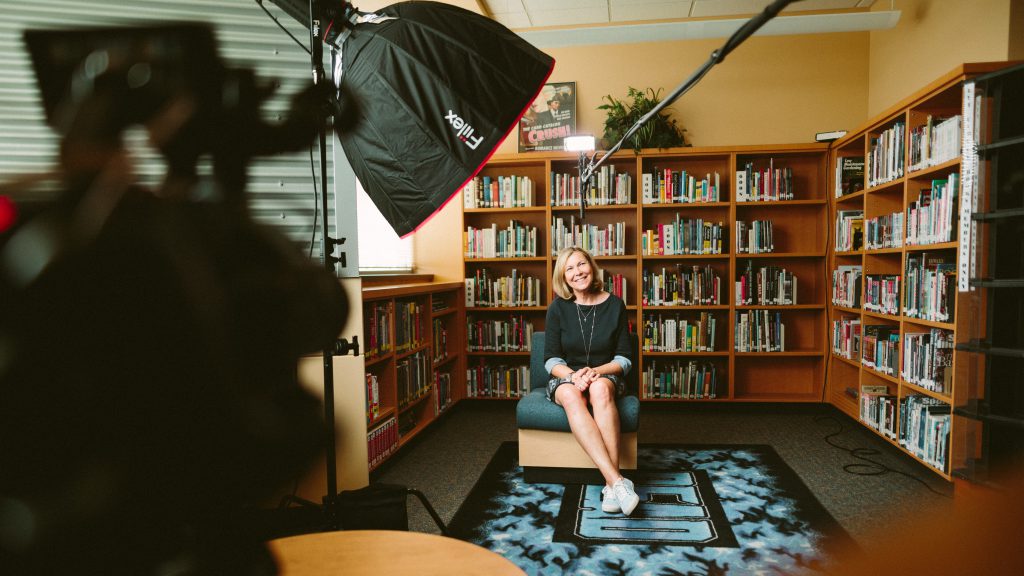
Live-Action Training Footage: On-site filming that captures real procedures, real equipment operation, and real safety protocols as they actually happen, using the actual environment and actual employees instead of a studio recreation.

When: The Deployment Context
On-Demand Access: The video plays the instant the task calls for it, not whenever a live trainer’s calendar allows. A forklift operator reviewing a loading procedure at 6am on a Saturday pulls it up and watches it right there.
Onboarding Sequence: A structured video library stands in for the first two weeks of shadowing. New hires work through indexed content at their own pace, and no senior employee has to step away from their own job to supervise it.
Where: The Distribution Environment
Learning Management Systems: Video assets are packaged to SCORM standards and plugged into HR platforms like Workday, BambooHR, and Cornerstone, where the system logs who finished the module, how they scored on the quiz, and generates the audit trail compliance needs.
Internal Intranet and Video Libraries: Every clip gets tagged by procedure, department, and skill level and dropped into an indexed library, turning the collection into a searchable visual reference employees can query on their own.
Why: The Business Case
Consistency: A video plays back the same information in the same order with the same emphasis on every viewing. A live trainer varies session to session. That gap compounds across hundreds of new hires over several years.
Liability Documentation: OSHA compliance, safety procedures, and other regulated training need proof that the material was actually completed. Routing the video through an LMS generates that proof automatically as a byproduct of watching it.

How Animated Explainer Videos
Get Produced
Why Animation Explains What a Camera Cannot Show
Some concepts just don’t lend themselves to visual representation. Software logic and insurance policy structures are prime examples. Live-action video can’t make them concrete. Animation can. The mechanism starts with picking a style that matches the content category. Narrative explainers get 2D character animation, because a protagonist moving through a problem is what carries the story. Step-by-step process explanations get whiteboard animation, because the diagram builds in front of the viewer at the pace comprehension actually requires. Data-heavy and technical explainers get motion graphics and kinetic typography, since character animation lands in the wrong register against that material. Choose the style against the category, not against a preference, or the finished piece feels mismatched no matter how clean each element is. From there the work runs through set stages: script approval, voiceover recording, storyboard, style frames, animatic, full animation, and final polish. The script gets locked first. The voiceover gets recorded second. The animation gets timed to that audio third. Each gate opens the next one. Animation projects that overrun their budget almost always overran in revision rounds, and those rounds started at an earlier stage that got approved too thinly.
Animation removes ambient noise from the communication. The viewer sees only what the concept requires.
How Live-Action Training and Onboarding Videos Get Filmed
How a Once-Built Video Library Replaces Four Hours of Manual Onboarding Per New Hire
The senior manager has been onboarding new hires for eleven years, four hours at a time, one hire at a time. Build the library once and those four hours per hire stop getting spent. The math is straightforward. Organizational will is the one input nobody can automate.
Onboarding Video Libraries:
Build the onboarding library around what the first two weeks actually require: company mission and values, system access and tool walkthroughs, department-specific procedures, HR policies, safety protocols, and facility orientation. Cut each module to three to five minutes and index it by topic. Hand the new hire a tablet or laptop and let them move through the modules at their own pace. The senior manager returns to billable work. Record it once and hire number four hundred sees the same content hire number one saw, which live onboarding never delivers.
Procedure and Compliance Documentation:
Anything safety-critical, anything OSHA-required, every equipment operation protocol, and all regulated compliance content has to come with documented evidence that the training occurred and that the employee understood it. A live training session produces a sign-in sheet. Host the video in an LMS and it writes a timestamped completion record with quiz scores attached. Pull the LMS report and the OSHA inspector’s request for forklift certification training documentation is answered in thirty seconds.
The video is not there to replace the relationship between a new employee and their manager. It takes over the two weeks of structured information transfer that comes before that relationship.
How Scriptwriting and Instructional Design Drive Production
A Phone Camera Pointed at a Presenter Captures a Lecture, Not Instruction
A lecture recorded on a phone is not a training video. It is a lecture recorded on a phone. The medium changes. The instructional design does not carry over automatically.
Adult Learning Principles and Script Structure:
Effective training scripts follow adult learning principles. Contextualize before you deliver: why does this matter, what happens if this step is skipped, what does correct execution look like. A script that opens with the consequence of getting the procedure wrong, and only then explains the procedure, works on the listener differently than one that opens with a definition. Chunking does the rest. Break a complex procedure into discrete steps with natural pause points so comprehension catches up before the next section starts. A 45-minute procedure divided into nine five-minute modules with a summary slide between each one produces measurably higher retention than the same material delivered in a single unbroken sitting.
Script Lock Before Production Begins:
Locking the script before production is not a formality. Once the voiceover is recorded and the animation is timed to it, changing a line means re-recording the audio and re-timing every element synced to it. Approving the script in writing first keeps that rework from landing after production has already started.
The script is the product. The animation and voiceover are the delivery mechanism.
How Screen Recording and Software Demos Get Built
Why Recorded Software Demos Outperform Live Presentations
A live software demo carries risk. The server lags at the worst possible moment. The presenter clicks the wrong button. The client’s first impression of the product is a broken one. Recorded software demos carry none of that. Every transition is deliberate, every click intentional. The demo doesn’t have bad days or technical issues. It’s always prepared and polished.
Polished Screen Capture Production:
High-quality screen recording captures the interface in 4K resolution, removing desktop clutter to provide a clear view of relevant UI elements. Mouse movement is smoothed, typing accelerated to eliminate dead time, and annotations highlight key features. The result is an engaging two-minute walkthrough that communicates the product’s value quickly.
Pre-Meeting Send and Sales Cycle Compression:
Pre-meeting demo videos alter the sales landscape. Prospects arrive with a basic understanding of the concept and interface, allowing meetings to start at a more advanced level. Objections are anticipated and addressed before the meeting even begins. The education phase happens asynchronously, compressing the sales cycle.
A botched live demo can be a lasting negative impression. In contrast, a polished recorded demo provides a clean slate for future interactions.
How Micro-Learning Modules Get Structured
Why Short Modular Videos Replace Long Training Sessions
Nobody scrubs through a 45-minute training video to reach the three-minute section they came for. They give up and ask a colleague instead. Colleagues get sidetracked answering queries, which multiplies across the team. Meanwhile, employees miss out on crucial information, creating knowledge gaps that can lead to costly errors.
Modular Content Architecture:
Micro-modules, each 3-5 minutes long, indexed by task and topic create a video library that’s more like a reference book than a linear course. An employee seeking to process returns in the company ERP doesn’t need the full inventory management module; they want the concise ‘Processing a Customer Return’ clip.
Searchable Video Libraries and Knowledge Bases:
Phoenix manufacturers with intricate production procedures need an organizational knowledge base. A well-structured video library, indexed by machine, process, and department, replaces onboarding documents, process manuals, and policy PDFs as the go-to resource for employees. Video is the format employees prefer over printed materials.
The 45-minute training video is not a resource. It blocks access to the information it contains.
How Motion Graphics and Kinetic Typography Get Built for Training
Motion Graphics Hold Attention That a Static Slide Loses
Motion graphics capture attention by synchronizing visual elements with audio cues, propelling the viewer through the narrative at a pace that keeps them actively engaged. This approach counters the static nature of slides, which invites disengagement by allowing the eye to wander ahead and lose interest in the audio component.
Kinetic Typography for Policy and Compliance Content:
Compliance content poses a unique challenge: it must be both informative and precise. Kinetic typography successfully addresses this dual requirement by marrying text animation with voiceover narration, creating an immersive experience that synchronizes pace and content. For policy-driven material, where exact wording is crucial, animated text serves as a complementary reinforcement rather than a competitive distraction. Data privacy policies, safety regulations, and legal disclosures are the categories where this format consistently outperforms a static slide deck in measured retention.
Motion Graphics for Data and Process Visualization:
Dynamic visualizations outperform static diagrams at communicating relationships and sequences because they show causation directly: this step feeds that one, which feeds the next. A supply chain flow that takes three slides to explain statically takes thirty seconds when animated, because the motion carries the direction and the order that a static diagram has to spell out with labels and arrows.
Motion graphics are not decoration. They move a viewer from having watched to having understood.

How Video Accessibility and Multilingual Localization Get Handled
How Multilingual Production Workflows Adapt to Workforce Needs
A monolingual safety training video is a documented liability. Phoenix draws on a workforce that speaks more than English, and a completion record proves attendance rather than comprehension: it does not separate the employee who understood the protocol from the one who sat through a video in a language they do not speak fluently.
Accessibility and localization are compliance necessities in many sectors. Effective training is delivered when it meets the language requirements of the workforce; ineffective training merely meets technical standards.
- Subtitles, Captions, and Voiceover Dubbing: Closed captions serve deaf employees, but translated subtitles and voiceovers in Spanish, Portuguese, Mandarin, or other languages required by the workforce extend content reach to employees for whom English isn’t primary. Dubbing voiceover with native speakers preserves cultural nuance, ensuring training is understood rather than merely translated.
- SCORM Compliance and LMS Tracking: SCORM packaging enables a video to interact with the Learning Management System (LMS), reporting completion percentages and quiz scores, associating data with employee records. This facilitates regulatory requests for documentation of specific safety training completions on particular dates, resolving claims of inadequate training in incident investigations.

How Training Video
Effectiveness and ROI Get Measured
Ten Safety Incidents Per Year Became Two After the Training Video Rolled Out. That Drop Is How ROI Gets Calculated.
Operational outcomes hinge on a precise set of metrics: training investment’s tangible returns are quantified by error frequency, onboarding duration, support call volume, and compliance incident rates.
 What Operational Metrics Show Before and After Launch
Concrete data from real-world applications underscores the value of video-based safety training. For instance, one facility saw a marked decrease in safety incidents following implementation. An onboarding program moved time-to-productivity for new customer service representatives from four weeks to two weeks, with the labor cost saving that implies. A software company that published a video knowledge base measured a 30% reduction in support call volume against the cost of producing it.
 How Completion and Quiz Data Get Logged
LMS quiz data flags the exact questions employees consistently get wrong, which points straight at the sections of content that are not communicating. When 40% of employees miss the same question, the question has stopped measuring employee competence. It is a measurement of content clarity. That reading is what drives a targeted revision instead of a guess, and the next cohort scores better because of it.

How Post-Production Updates Work With Modular Video Architecture
Why Modular Video Architecture Reduces Long-Term Update Costs
Interfaces change, but only the affected modules need redoing. This modular approach keeps costs in check.
Training videos are built as standalone units rather than continuous productions. Each topic is self-contained with its own intro and outro.
- Modular Edit Architecture: Unchanged components like voiceovers and context sections stay intact from one version to the next.
- Asset Archival and Future Updates: Original source files are preserved at the end of production. When an update is required, the team can access and replace individual components. This maintains consistency across updates, even when policy numbers change.
Businesses that invest in modular video libraries reap long-term cost savings. The financial gap between modular and traditional productions grows with each content revision.

Frequently asked questions
How much does an animated explainer video cost?
Pricing runs per finished minute and scales with production complexity. Whiteboard or simple 2D work lands between $3,000 and $6,000 per minute. Full 3D motion graphics with layered effects run $8,000 to $15,000 per minute. The number moves based on animation style, how many custom assets need building, and how many revision passes are built into the schedule. A detailed creative brief lets the team quote an accurate figure instead of a wide range.
Can existing screen recordings be incorporated into a produced demo?
It depends on what the raw footage looks like when it arrives. Clips shot in 1080p or higher, with a clean desktop and steady cursor movement, can usually be dropped straight into the edit. Footage with exposed personal data on screen, jittery mouse tracking, or resolution under 1080p typically gets scrapped and re-recorded from scratch, since fixing those problems in post takes nearly as many hours as filming it again.
Is a script required before production begins?
Yes, and sign-off happens before a single frame gets animated or recorded. The reason is sequencing: once animation is timed to a voiceover track, moving a scene means re-timing everything downstream of it. Editing a line in a script document takes minutes and costs nothing. Making that same change after animation work has started means unwinding hours of synced timeline work.
How long does production take?
The clock starts once the script is locked. Animated explainers run four to eight weeks from approved script to final delivery, covering storyboard, animation, and sound design passes. Live-action training modules move faster at two to four weeks, since the schedule is a shoot day plus editing rather than a frame-by-frame build. Both estimates assume one revision round; each additional round adds time proportional to how much footage or animation it touches.
What voiceover options are available?
Casting draws from a roster of professional voice talent covering a range of tones, genders, accents, and languages. Before any audio gets recorded, a shortlist of audition clips goes out for review so the voice can be matched to the brand and the audience it is training. That matching step happens at the front of the timeline, not as a patch applied afterward.
Can production occur in an active manufacturing or industrial facility?
Yes. Filming on an active production floor takes coordination before the crew ever shows up: safety compliance sign-off, PPE for every person on set, and a shooting schedule built around the line’s actual operating windows rather than the crew’s convenience. Crews who have worked industrial floors before know how to position cameras and lighting so the work being filmed never has to stop.
Who owns the finished video and source files?
Full ownership of the finished video, across every delivered file format, transfers to the client. The raw source files and project archive stay on the production company’s system, where they remain accessible whenever a future update comes up. That split is standard: the finished product belongs outright to the client, while terms for pulling from the project archive for later edits get spelled out in the original contract.
What happens when the software shown in the demo is updated?
The screen capture segments get re-shot against the new interface and dropped into the existing edit in place of the outdated footage. As long as the workflow itself did not change enough to require a new script, the original voiceover track stays untouched and only the visual layer gets swapped out. Because the update is a targeted swap rather than a rebuild, it bills as an hourly edit rather than a new production.
Do training and explainer videos affect SEO?
Yes, through two mechanisms working together. A video embedded on a page keeps visitors there longer, and that extra dwell time reads as a positive engagement signal to search algorithms. Separately, hosting the same video on YouTube while embedding it on-site creates a second indexable asset built around the same keywords. When that YouTube upload ranks on its own for a term the website already ranks for organically, the two results together claim more space on the search page for that query.
Can training content include humor?
Yes, provided the subject matter and audience can support the tone. The mechanism at work is psychological distance: humor closes the gap between the viewer and dry material, which makes the content easier to hold onto. Opening a forklift safety module with a dry comedic bit instead of a standard regulatory disclaimer does not make the training less rigorous. It raises the odds the video gets watched start to finish, and finishing it is the baseline requirement for any of it to stick.

Google partner
Premiere Agency