 610.432.2600
How an Opted-In List Keeps Every Message
Landing Without an Algorithm’s Permission
Facebook’s organic reach fell from roughly 16% in 2012 to under 2% by 2018, the cumulative result of a multi-year series of feed-ranking changes rather than one update. The platform simply changed how its feed sorted content, and every business that had built a list there watched delivery drop with no dashboard warning and no appeal button to click.
Email works differently because the trigger lives in code a business controls: a sign-up form fires a welcome flow, a purchase fires a receipt, and no outside platform can flip a switch to silence any of it.
Project Snapshot: The 5 Ws
Key Variables in an Email Marketing Program
The Who
The What
The When
The Where
The Why

Who: The Contacts a Trigger Fires At
The Opted-In Subscriber: Targeted individuals with verified interest in specific content or offers, providing a clear indication of their willingness to engage further.
The Segmented Contact: Subscribers whose purchasing behavior and expressed preferences are tracked, enabling subsequent messages to align closely with their demonstrated interests.

What: The Flows Being Built and Wired
Automated Flows: Campaigns triggered by actions such as signing up for an account or making a purchase. Once set in motion, they run continuously without manual intervention.
Broadcast Campaigns: Crafted messages written and scheduled manually for the entire list or specific segments, requiring intentional send decisions to maintain relevance and interest.

When: The Trigger That Starts the Send
Behavior-Triggered Sends: Timely dispatch of messages based solely on specific user actions like cart abandonment, purchases, or link clicks. The action itself determines message timing.
Cadence-Based Broadcasts: Consistency matters more than frequency in email communication. A single relevant message sent at regular intervals outperforms irregular or infrequent messaging.

Where: The Inbox the Message Must Reach
Primary Inbox vs. Tabs: Optimal use of plain-text formatting and minimal images, combined with conversational copy style, enhances the likelihood of messages landing in the Primary inbox tab.
Mobile vs. Desktop: Over 60% of email opens happen on a phone, where the subject line gets cut off around 35 characters. A template that was never built for that screen breaks exactly where most subscribers meet it first.

Why: The Mechanism That Brings Buyers Back
Retention vs. Acquisition Cost: Acquiring a new customer runs 5 to 7 times what it costs to keep an existing one. Email is the mechanism that keeps that relationship active between purchases.
Lifetime Value Extension: Initial transactions alone rarely generate sufficient long-term value without additional interactions. Thoughtfully crafted post-purchase sequences can significantly alter this financial equation.

Email List Building and
Lead Magnet Strategy
How a Specific Lead Magnet Triggers a Signup Where a Generic Signup Form Never Fires
The email address has a price. The lead magnet is what pays it.
Specific opt-ins from 800 engaged homeowners outpace generic sign-ups from 8,000 passive readers. List size is a hollow metric until engagement data validates its worth. A lead magnet is a specific resource offered in exchange for an email address, and a PDF that solves one narrow problem outperforms a broad ebook every time: a 14-day email course on commercial lease negotiation, a pricing calculator a contractor actually uses on bids, a checklist of the code violations a rental property fails on first inspection. The narrower the problem it addresses, the more qualified the subscriber who downloads it. Placement matters as much as the offer: footer signup boxes convert at fractions of a percent, while an exit-intent popup, an embedded form inside a relevant blog post, and a dedicated landing page running from paid search produce real list growth.
Email Segmentation and Contact Tagging Strategy
How Tagging Rules Route Every Send So Nobody Gets the Wrong Message
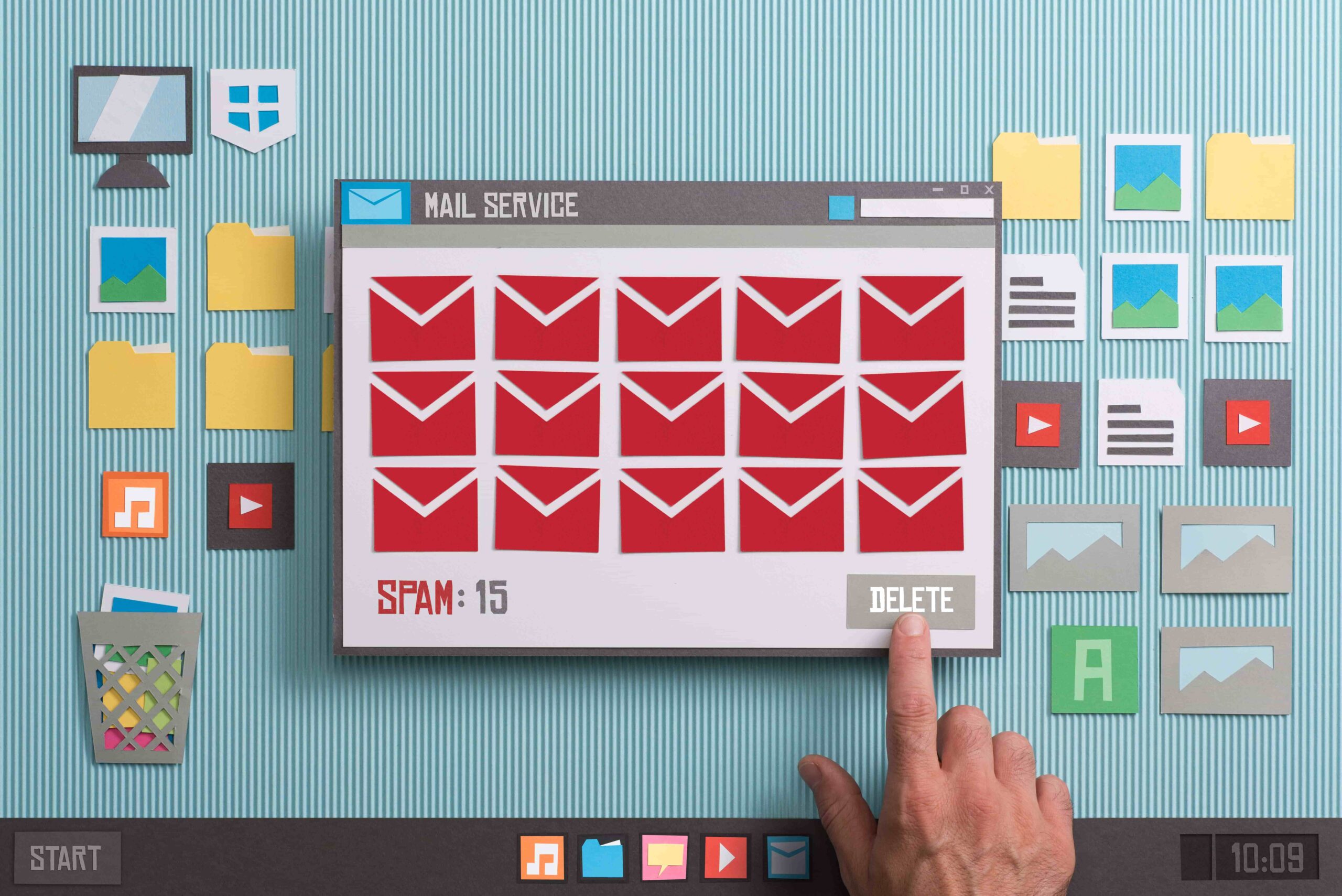
The subscriber who bought dog food just received a cat food promotion. They now know the business does not know who they are. That is the full cost of unsegmented email. One send. One broken relationship signal.
Behavioral and Demographic Segmentation:
Behavioral segments rely on concrete actions: purchases made within the past 90 days, links clicked, or emails opened. Demographic segments utilize known attributes: location, industry, business size, and job function. Phoenix residents with distinct lifestyles have varying pain points, necessitating targeted campaigns that cater to their unique needs.
Tagging and Interest Tracking:
Every interaction (a link click, page visit, or download) provides valuable insight into subscribers’ interests. Tags serve as labels, capturing these interactions on the subscriber’s record, enabling subsequent messages to address specific topics rather than broadcasting a generic service catalog. The necessary data is often available; it’s merely a matter of using it correctly.
Segmentation isn’t about reducing email frequency but rather delivering targeted content that subscribers can immediately recognize as relevant to their interests, thereby avoiding the hallmark of mass communication: the generic and impersonal pitch.
Automated Email Sequences and Trigger-Based Flows
What Fires the Moment a Cart Sits Abandoned
At 2am on a Tuesday the abandoned cart sequence fired, ran three emails over 48 hours, and recovered two sales. Nobody was at a desk. That is what automation is for. What starts a flow is an event, not a person: a form submission, a cart left sitting, a 30-day silence from a contact who used to open every send. The trigger fires the sequence, and the sequence branches from there on what the recipient does next, whether they open, click, or ignore it.
Welcome Series:
Every message in the welcome sequence fires on a fixed delay after signup, walking a new subscriber from first impression toward a first purchase without anyone touching send. Each email builds on the last: the welcome message sets expectations, the follow-ups introduce products or proof, and the final message in the sequence makes the first offer. That order is what turns a signup into a customer instead of a name sitting on a list.
Abandoned Cart and Re-Engagement Flows:
Abandoned cart recovery rates climb when the email fires within one hour of the cart being left, pulling back 5 to 15% of those sessions. The first message names the product. The second fires 24 hours later and either answers the objection that usually stalls that category or attaches a modest incentive. Re-engagement sequences run the same way on dormant subscribers: a direct message goes out, and the response either revives the contact or marks it for removal.
The flow is a one-time build. Build it once, and each recovery that follows draws no additional labor cost.
Email Deliverability and Sender Reputation Management
How Authentication Records Decide Whether the Inbox Ever Sees the Email
Deliverability fails before the content is ever read. Both causes are technical ones: gaps in authentication and a damaged sender reputation. Better writing does not fix them.
SPF, DKIM, and DMARC:
SPF works by listing the IPs authorized to send email for a domain. DKIM signs each message with an encrypted signature, and receiving servers verify it to confirm the message was not altered in transit. DMARC hands receiving servers their instruction for a message failing SPF or DKIM: deliver, quarantine, or reject. All three are DNS records. Drop a single record and ISPs acquire a structural reason to distrust the domain, no matter the send frequency or content quality. These are not advanced configurations. They are baseline.
IP Warming and List Hygiene:
A new sending IP has no reputation. ISPs make delivery decisions based on reputation history. Push high volume from a new IP and filters trigger immediately. IP warming works by starting low and stepping volume up over weeks while ISPs observe engagement patterns. List hygiene pulls hard bounces and long-inactive subscribers out before that accumulation reads as negligence. Push a list carrying a 10% hard bounce rate and each receiving ISP draws the same conclusion about the sender’s contact management.
Sender reputation is built over months. Send once to an unverified purchased list and the damage takes months of careful sending to reverse.
Email Copywriting and Subject Line Optimization
How Three Seconds at the Subject Line Decide Open or Delete
Delete or open. Three seconds. That judgment works from the sender name and the subject line, and nothing else.
Subject Line Structure:
Crafting timely advice that resonates with subscribers hinges on specificity, not just personalization tokens. A generic message can be personalized in form but lacks substance, failing to resonate with readers who instinctively detect insincerity. In contrast, a clear and concise subject line like ‘Cut Heating Costs Before February’ suggests relevance and piques curiosity.
Single CTA and Readable Structure:
Focus on a single call to action. Avoid overwhelming the subscriber with multiple options or postscripts. Research shows that an email asking the subscriber to do five separate things produces roughly the same click-through rate as one asking for zero, because every extra request dilutes the single action that matters. To maximize impact, keep paragraphs brief and distill the offer into a clear message that communicates within 20 seconds of scanning.
In service-oriented industries, plain-text emails formatted like direct messages often outperform designed HTML templates in terms of deliverability and engagement. The template’s polished design can signal broadcast intentions, whereas plain text conveys a more personal tone, fostering a greater sense of connection with the recipient.
A/B Testing and Email Campaign Optimization
How the Platform Splits, Times, and Declares a Subject-Line Winner
Version A pulled a 21% open rate. Version B pulled 33%. Same list, same send, and the only thing that changed was the subject line. That is the method: the platform sends both versions to small test segments, times the evaluation window, and fires the winning subject line to the rest of the list on its own.
What to Test First:
Subject line efficacy far surpasses that of content changes in terms of performance variance. A single subject line adjustment can shift open rates 20 to 40% between variants. Content tests (image-heavy versus plain text, long versus short copy) move click rate rather than open rate, so running one on an email with a weak subject line only reports back from the small group that opened it.
Statistical Significance:
A 15% lead after two days across 200 subscribers is early variance, not a winner. The rule is to wait for the platform to confirm statistical significance before acting; stopping the test early and shipping the apparent winner is how a program ends up tuning itself on noise. Most email platforms automatically calculate significance, taking into account factors like sample size and day-of-week behavioral variation.
The winning variant becomes the new control. The following test launches from that baseline instead of the original.


List Hygiene and CAN-SPAM Compliance
How Low Engagement on a Large List Signals Trouble to Inbox Providers
ISPs score sender reputation partly by engagement rate. When a large list shows low engagement, receiving servers read that as a signal: the sender is likely mailing addresses that are no longer valid or wanted. Once that signal registers, every subscriber on the list, including the engaged ones, can end up filtered along with it.
Those who unsubscribe were unlikely customers to begin with; their departure leaves the list more refined and accurate.
- List Scrubbing and Re-Engagement: Subscribers who’ve been inactive for 180 days receive a discreet direct message inquiring about their continued interest in staying on the list. Those who respond stay, while those who don’t respond within two to three weeks are quietly removed. This subtle process not only streamlines the list but also sends a crucial trust signal to ISPs.
- CAN-SPAM, GDPR, and Purchased Lists: Commercial email regulations demand strict adherence: functioning unsubscribe links, valid physical addresses, accurate sender identification, and truthful subject lines are non-negotiables. Failure to comply can result in fines as steep as roughly $53,000 per email, while GDPR mandates explicit documented consent for EU contacts, a stipulation that purchased lists typically flout.

Email Analytics and
Performance Measurement
How iOS 15 Mail Privacy Protection Changed Email Open Rate Tracking
Here is the mechanism behind the distortion: Apple’s Mail Privacy Protection, active on a large share of subscribers’ devices, pre-fetches every tracking pixel the moment a message arrives, whether or not a human ever opens it. That registers as an open in the platform dashboard. The result runs 15 to 30 percentage points higher than actual engagement, which is why optimization decisions built on open rate alone tend to point the wrong direction.
 Metrics That Reflect Actual Engagement:
Click-through rate tracks who clicked; conversion rate tracks who bought. Revenue per recipient goes one step further and runs the actual math: divide the revenue a campaign generated by the number of people it was sent to, and the resulting figure lets a business line up different lists, segments, and platforms side by side on the same scale.
 Revenue Attribution:
UTM parameters in email links and CRM systems enable marketers to tie specific campaigns to downstream revenue. By analyzing these connections, a business can assign a monetary value to the welcome series: a sequence producing $18 in average revenue per subscriber who completes it sets the ceiling on what a new subscriber is worth acquiring.

Email Platform Selection and ROI Analysis
How the Platform Picked First Sets a Ceiling on Every Automation Later
Inefficient platforms impose a hard ceiling on capabilities, converting cost savings into lost revenue until they’re replaced. This misaligned investment can persist indefinitely if left unaddressed.
- Platform Fit by Use Case: For e-commerce on Shopify and similar platforms, Klaviyo is the industry standard for behavioral data integration, using purchase history to segment customers and predict lifetime value. HubSpot wires email into the CRM and the sales pipeline, which is the fit for B2B where email is one touchpoint in a longer sales cycle worked by several people. Entry-level platforms handle small lists and simple broadcasts; the automation ceiling is what starts to bind as the program gets more complex.
- ROI Calculation: A service business with 2,000 subscribers, an illustrative 25% click rate on promotional sends (a high-engagement best case, well above the 2-3% typical of a broadcast), and a 10% conversion rate on those clicks produces 50 transactions per broadcast. At a $300 average transaction value, that one send generates $15,000 in attributed revenue, against a platform cost of $50 to $150 per month. Run the numbers and the conclusion holds: neglecting to build the list costs more than choosing the wrong tool.
The automation only runs as well as the list feeding it: triggers, segments, and send logic all depend on data the list already holds. Pick the wrong platform and a business can migrate; lose the list and there is nothing left to automate.

Frequently asked questions
Is email marketing still effective?
Yes. Email returns roughly $36 for every $1 spent, the highest documented ROI of any digital channel, and it holds up because delivery does not depend on a feed algorithm: a message sent to an opted-in list reaches the inbox on the sender’s schedule, not a platform’s. Automated flows keep converting around the clock without new spend, and segmentation keeps the content relevant enough that subscribers stay engaged instead of unsubscribing. The channel underperforms only where hygiene and targeting are neglected, not because the format itself has weakened.
How often should a business send emails?
Frequency and quality are intertwined. Subscribers who feel bombarded by frequent emails will abandon them, while those who don’t hear from a business for too long may forget it exists. E-commerce businesses running active promotions can carry 2 to 3 sends per week. B2B service firms usually perform best at once per week or biweekly. The send data settles the question faster than any general rule.
Should a business ever buy an email list?
Purchased email lists are a recipe for disaster. They lead to sky-high bounce rates and complaint rates, damaging deliverability irreparably. Major platforms prohibit their use, while GDPR explicitly requires consent before sending emails to EU contacts. One large send to an unverified list can take months to recover from.
What is the difference between a soft bounce and a hard bounce?
Soft bounces indicate temporary issues, such as a full mailbox or a server that’s briefly down. Platforms automatically retry these emails for up to 72 hours. Hard bounces are permanent, meaning the address is invalid or the domain doesn’t accept email. Remove hard-bounced addresses immediately; continued sends raise the bounce rate and prompt ISPs to flag the sender as negligent.
Why do emails land in the Promotions tab?
Gmail uses a sophisticated algorithm that considers image-to-text ratios, unsubscribe links, promotional language, and sender history to determine where messages land: either in the Primary inbox or the Promotions tab. Businesses can influence this by adopting conversational tones, minimal images, and consistent sending from domains with strong engagement records.
What is double opt-in and when should it be used?
Double opt-in: a best practice for responsible email marketing. It requires subscribers to confirm their interest through an extra click, ensuring they’re genuinely engaged. This process may reduce list size but yields higher engagement rates and better sender reputation signals over time, essential for GDPR compliance in EU regions.
What is revenue per recipient and why does it matter?
Revenue per recipient measures campaign effectiveness beyond raw metrics like open or click-through rates. For example, if $8,000 revenue is generated from 5,000 subscribers, the RPR is $1.60. Tracking that number send over send shows which campaigns are actually converting rather than just getting opened, and it lets a business compare lists, segments, or platforms on the same scale.
What is the difference between HTML and plain-text email?
HTML messages are rich in visual elements and branded formatting but can be flagged as spam due to these characteristics. Plain text emails, on the other hand, have fewer signals associated with bulk commercial sending, making them more deliverable in contexts where direct communication is valued, such as B2B or service businesses.
How should email performance be measured after iOS 15?
Engagement metrics tell a story about email’s effectiveness and potential for damage. Click-through rates are primary indicators of interest, but they’re just one piece of the puzzle. Conversion rates connect email activity directly to business outcomes, while complaint rates signal deliverability issues that must be addressed promptly. Open rate is unreliable on any list with a meaningful iOS Mail share and should be treated as directional only.
Can email automation replace manual campaign sends?
Automated flows excel at behavior-driven communication, offering precision timing and scale unmatched by manual sending. Welcome sequences, abandoned cart reminders, and post-purchase follow-ups are just a few examples of how automation supports ongoing relationships while broadcasts allow businesses to make timely offers based on current context. The ideal approach strikes a balance between both strategies.

Google partner
Premiere Agency